Are You Responsible For The Panty Vibrator Budget? 12 Top Ways To Spen…
페이지 정보

본문
Applications of Ferri in Electrical Circuits
Ferri is a magnet type. It can be subject to spontaneous magnetization and also has Curie temperature. It is also utilized in electrical circuits.
Behavior of magnetization
Ferri are materials that possess magnetic properties. They are also known as ferrimagnets. This characteristic of ferromagnetic substances can be observed in a variety. Some examples include the following: * ferromagnetism (as seen in iron) and * parasitic ferrromagnetism (as found in the mineral hematite). The characteristics of ferrimagnetism differ from those of antiferromagnetism.
Ferromagnetic materials have a high susceptibility. Their magnetic moments tend to align with the direction of the applied magnetic field. Because of this, ferrimagnets are highly attracted by a magnetic field. Ferrimagnets can become paramagnetic if they exceed their Curie temperature. They will however return to their ferromagnetic form when their Curie temperature is near zero.
The Curie point is a remarkable characteristic that ferrimagnets exhibit. At this point, the alignment that spontaneously occurs that results in ferrimagnetism gets disrupted. As the material approaches its Curie temperatures, its magnetization ceases to be spontaneous. The critical temperature causes an offset point to counteract the effects.
This compensation point is very useful in the design of magnetization memory devices. For instance, it is important to be aware of when the magnetization compensation point occurs so that one can reverse the magnetization at the fastest speed that is possible. In garnets the magnetization compensation line is easy to spot.
A combination of the Curie constants and Weiss constants govern the magnetization of ferri. Table 1 lists the typical Curie temperatures of ferrites. The Weiss constant is the same as Boltzmann's constant kB. When the Curie and Weiss temperatures are combined, they create an arc known as the M(T) curve. It can be read as this: The x mH/kBT is the mean time in the magnetic domains, and the y/mH/kBT represents the magnetic moment per an atom.
Common ferrites have an anisotropy constant for magnetocrystalline structures K1 that is negative. This is because of the existence of two sub-lattices having different Curie temperatures. This is the case with garnets, but not ferrites. The effective moment of a ferri lovense could be a little lower that calculated spin-only values.
Mn atoms can decrease the magnetization of ferri adult toy. They are responsible for strengthening the exchange interactions. Those exchange interactions are mediated by oxygen anions. These exchange interactions are weaker in garnets than ferrites however they can be powerful enough to produce a pronounced compensation point.
Curie temperature of ferri
Curie temperature is the critical temperature at which certain materials lose their magnetic properties. It is also referred to as the Curie temperature or the magnetic temperature. It was discovered by Pierre Curie, a French physicist.
If the temperature of a ferrromagnetic substance exceeds its Curie point, it is paramagnetic material. However, this change does not have to occur all at once. It happens in a finite temperature period. The transition from ferromagnetism to paramagnetism occurs over the span of a short time.
During this process, normal arrangement of the magnetic domains is disturbed. This leads to a decrease in the number of electrons that are not paired within an atom. This is usually associated with a decrease in strength. Based on the chemical composition, Curie temperatures range from a few hundred degrees Celsius to more than five hundred degrees Celsius.
As with other measurements demagnetization techniques do not reveal the Curie temperatures of the minor constituents. Therefore, the measurement methods frequently result in inaccurate Curie points.
The initial susceptibility of a mineral may also influence the Curie point's apparent location. Fortunately, a brand new measurement technique is now available that returns accurate values of Curie point temperatures.
The first goal of this article is to go over the theoretical background of various approaches to measuring Curie point temperature. Then, a novel experimental protocol is presented. A vibrating-sample magnetometer is used to precisely measure temperature variations for a variety of magnetic parameters.
The new method is built on the Landau theory of second-order phase transitions. Using this theory, an innovative extrapolation technique was devised. Instead of using data below the Curie point the method of extrapolation relies on the absolute value of the magnetization. By using this method, the Curie point is calculated for the highest possible Curie temperature.
However, the method of extrapolation might not work for all Curie temperature ranges. To improve the reliability of this extrapolation, a brand new measurement protocol is suggested. A vibrating-sample magneticometer can be used to measure quarter hysteresis loops in a single heating cycle. During this period of waiting, the saturation magnetization is returned in proportion to the temperature.
Many common magnetic minerals exhibit Curie temperature variations at the point. The temperatures are listed in Table 2.2.
Spontaneous magnetization of ferri
Materials that have magnetism can experience spontaneous magnetization. This happens at the micro-level and is due to alignment of uncompensated spins. It is different from saturation magnetization, which is induced by the presence of a magnetic field external to the. The strength of the spontaneous magnetization depends on the spin-up-times of the electrons.
Materials with high spontaneous magnetization are ferromagnets. The most common examples are Fe and Ni. Ferromagnets consist of different layers of ironions that are paramagnetic. They are antiparallel and have an indefinite magnetic moment. These are also referred to as ferrites. They are typically found in the crystals of iron oxides.
Ferrimagnetic materials are magnetic due to the fact that the magnetic moments of the ions in the lattice are cancelled out. The octahedrally-coordinated Fe3+ ions in sublattice A have a net magnetic moment of zero, while the tetrahedrally-coordinated O2- ions in sublattice B have a net magnetic moment of one.
The Curie temperature is the critical temperature for ferrimagnetic materials. Below this temperature, spontaneous magnetization is restored, and above it the magnetizations are cancelled out by the cations. The Curie temperature is extremely high.
The magnetic field that is generated by a substance can be massive and may be several orders-of-magnitude greater than the maximum field magnetic moment. In the lab, it is typically measured using strain. It is affected by a variety factors as is the case with any magnetic substance. Particularly, the strength of spontaneous magnetization is determined by the number of electrons unpaired and the size of the magnetic moment.
There are three major ways in which atoms of their own can create magnetic fields. Each of these involves a competition between thermal motion and exchange. These forces interact positively with delocalized states that have low magnetization gradients. However the competition between the two forces becomes much more complex at higher temperatures.
For instance, when water is placed in a magnetic field the magnetic field will induce a rise in. If the nuclei are present in the water, the induced magnetization will be -7.0 A/m. However it is not feasible in an antiferromagnetic material.
Applications of electrical circuits
The applications of love sense ferri in electrical circuits comprise relays, filters, switches, power transformers, and telecoms. These devices employ magnetic fields in order to activate other components in the circuit.
Power transformers are used to convert power from alternating current into direct current power. This kind of device makes use of ferrites due to their high permeability, ferrimagnetic low electrical conductivity, and are extremely conductive. Furthermore, they are low in eddy current losses. They can be used to power supplies, switching circuits and microwave frequency coils.
Inductors made of ferritrite can also be manufactured. These inductors have low electrical conductivity and high magnetic permeability. They can be used in high-frequency circuits.
Ferrite core inductors can be classified into two categories: ring-shaped inductors with a cylindrical core and ring-shaped inductors. Inductors with a ring shape have a greater capacity to store energy and decrease leakage in the magnetic flux. Their magnetic fields can withstand high-currents and are strong enough to withstand these.
A variety of different materials can be utilized to make these circuits. For instance stainless steel is a ferromagnetic material and can be used in this kind of application. These devices aren't very stable. This is why it is vital to choose the best encapsulation method.
The applications of ferri in electrical circuits are restricted to a few applications. Inductors for instance are made up of soft ferrites. Hard ferrites are used in permanent magnets. Nevertheless, these types of materials are re-magnetized very easily.
Another kind of inductor is the variable inductor. Variable inductors are characterized by small thin-film coils. Variable inductors are used to adjust the inductance of the device, which can be very beneficial for wireless networks. Amplifiers can be also constructed by using variable inductors.
Telecommunications systems often employ ferrite core inductors. The ferrite core is employed in telecom systems to create the stability of the magnetic field. Additionally, they are used as a vital component in computer memory core elements.
Some other uses of lovense ferri panty vibrator in electrical circuits is circulators made from ferrimagnetic material. They are widely used in high-speed devices. They can also be used as the cores of microwave frequency coils.
Other uses of ferri include optical isolators made of ferromagnetic material. They are also utilized in telecommunications as well as in optical fibers.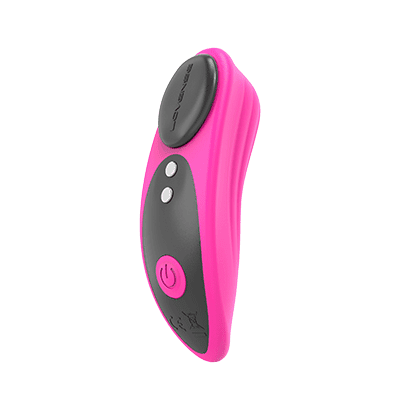
Ferri is a magnet type. It can be subject to spontaneous magnetization and also has Curie temperature. It is also utilized in electrical circuits.
Behavior of magnetization
Ferri are materials that possess magnetic properties. They are also known as ferrimagnets. This characteristic of ferromagnetic substances can be observed in a variety. Some examples include the following: * ferromagnetism (as seen in iron) and * parasitic ferrromagnetism (as found in the mineral hematite). The characteristics of ferrimagnetism differ from those of antiferromagnetism.
Ferromagnetic materials have a high susceptibility. Their magnetic moments tend to align with the direction of the applied magnetic field. Because of this, ferrimagnets are highly attracted by a magnetic field. Ferrimagnets can become paramagnetic if they exceed their Curie temperature. They will however return to their ferromagnetic form when their Curie temperature is near zero.
The Curie point is a remarkable characteristic that ferrimagnets exhibit. At this point, the alignment that spontaneously occurs that results in ferrimagnetism gets disrupted. As the material approaches its Curie temperatures, its magnetization ceases to be spontaneous. The critical temperature causes an offset point to counteract the effects.
This compensation point is very useful in the design of magnetization memory devices. For instance, it is important to be aware of when the magnetization compensation point occurs so that one can reverse the magnetization at the fastest speed that is possible. In garnets the magnetization compensation line is easy to spot.
A combination of the Curie constants and Weiss constants govern the magnetization of ferri. Table 1 lists the typical Curie temperatures of ferrites. The Weiss constant is the same as Boltzmann's constant kB. When the Curie and Weiss temperatures are combined, they create an arc known as the M(T) curve. It can be read as this: The x mH/kBT is the mean time in the magnetic domains, and the y/mH/kBT represents the magnetic moment per an atom.
Common ferrites have an anisotropy constant for magnetocrystalline structures K1 that is negative. This is because of the existence of two sub-lattices having different Curie temperatures. This is the case with garnets, but not ferrites. The effective moment of a ferri lovense could be a little lower that calculated spin-only values.
Mn atoms can decrease the magnetization of ferri adult toy. They are responsible for strengthening the exchange interactions. Those exchange interactions are mediated by oxygen anions. These exchange interactions are weaker in garnets than ferrites however they can be powerful enough to produce a pronounced compensation point.
Curie temperature of ferri
Curie temperature is the critical temperature at which certain materials lose their magnetic properties. It is also referred to as the Curie temperature or the magnetic temperature. It was discovered by Pierre Curie, a French physicist.
If the temperature of a ferrromagnetic substance exceeds its Curie point, it is paramagnetic material. However, this change does not have to occur all at once. It happens in a finite temperature period. The transition from ferromagnetism to paramagnetism occurs over the span of a short time.
During this process, normal arrangement of the magnetic domains is disturbed. This leads to a decrease in the number of electrons that are not paired within an atom. This is usually associated with a decrease in strength. Based on the chemical composition, Curie temperatures range from a few hundred degrees Celsius to more than five hundred degrees Celsius.
As with other measurements demagnetization techniques do not reveal the Curie temperatures of the minor constituents. Therefore, the measurement methods frequently result in inaccurate Curie points.
The initial susceptibility of a mineral may also influence the Curie point's apparent location. Fortunately, a brand new measurement technique is now available that returns accurate values of Curie point temperatures.
The first goal of this article is to go over the theoretical background of various approaches to measuring Curie point temperature. Then, a novel experimental protocol is presented. A vibrating-sample magnetometer is used to precisely measure temperature variations for a variety of magnetic parameters.
The new method is built on the Landau theory of second-order phase transitions. Using this theory, an innovative extrapolation technique was devised. Instead of using data below the Curie point the method of extrapolation relies on the absolute value of the magnetization. By using this method, the Curie point is calculated for the highest possible Curie temperature.
However, the method of extrapolation might not work for all Curie temperature ranges. To improve the reliability of this extrapolation, a brand new measurement protocol is suggested. A vibrating-sample magneticometer can be used to measure quarter hysteresis loops in a single heating cycle. During this period of waiting, the saturation magnetization is returned in proportion to the temperature.
Many common magnetic minerals exhibit Curie temperature variations at the point. The temperatures are listed in Table 2.2.
Spontaneous magnetization of ferri
Materials that have magnetism can experience spontaneous magnetization. This happens at the micro-level and is due to alignment of uncompensated spins. It is different from saturation magnetization, which is induced by the presence of a magnetic field external to the. The strength of the spontaneous magnetization depends on the spin-up-times of the electrons.
Materials with high spontaneous magnetization are ferromagnets. The most common examples are Fe and Ni. Ferromagnets consist of different layers of ironions that are paramagnetic. They are antiparallel and have an indefinite magnetic moment. These are also referred to as ferrites. They are typically found in the crystals of iron oxides.
Ferrimagnetic materials are magnetic due to the fact that the magnetic moments of the ions in the lattice are cancelled out. The octahedrally-coordinated Fe3+ ions in sublattice A have a net magnetic moment of zero, while the tetrahedrally-coordinated O2- ions in sublattice B have a net magnetic moment of one.
The Curie temperature is the critical temperature for ferrimagnetic materials. Below this temperature, spontaneous magnetization is restored, and above it the magnetizations are cancelled out by the cations. The Curie temperature is extremely high.
The magnetic field that is generated by a substance can be massive and may be several orders-of-magnitude greater than the maximum field magnetic moment. In the lab, it is typically measured using strain. It is affected by a variety factors as is the case with any magnetic substance. Particularly, the strength of spontaneous magnetization is determined by the number of electrons unpaired and the size of the magnetic moment.
There are three major ways in which atoms of their own can create magnetic fields. Each of these involves a competition between thermal motion and exchange. These forces interact positively with delocalized states that have low magnetization gradients. However the competition between the two forces becomes much more complex at higher temperatures.
For instance, when water is placed in a magnetic field the magnetic field will induce a rise in. If the nuclei are present in the water, the induced magnetization will be -7.0 A/m. However it is not feasible in an antiferromagnetic material.
Applications of electrical circuits
The applications of love sense ferri in electrical circuits comprise relays, filters, switches, power transformers, and telecoms. These devices employ magnetic fields in order to activate other components in the circuit.
Power transformers are used to convert power from alternating current into direct current power. This kind of device makes use of ferrites due to their high permeability, ferrimagnetic low electrical conductivity, and are extremely conductive. Furthermore, they are low in eddy current losses. They can be used to power supplies, switching circuits and microwave frequency coils.
Inductors made of ferritrite can also be manufactured. These inductors have low electrical conductivity and high magnetic permeability. They can be used in high-frequency circuits.
Ferrite core inductors can be classified into two categories: ring-shaped inductors with a cylindrical core and ring-shaped inductors. Inductors with a ring shape have a greater capacity to store energy and decrease leakage in the magnetic flux. Their magnetic fields can withstand high-currents and are strong enough to withstand these.
A variety of different materials can be utilized to make these circuits. For instance stainless steel is a ferromagnetic material and can be used in this kind of application. These devices aren't very stable. This is why it is vital to choose the best encapsulation method.
The applications of ferri in electrical circuits are restricted to a few applications. Inductors for instance are made up of soft ferrites. Hard ferrites are used in permanent magnets. Nevertheless, these types of materials are re-magnetized very easily.
Another kind of inductor is the variable inductor. Variable inductors are characterized by small thin-film coils. Variable inductors are used to adjust the inductance of the device, which can be very beneficial for wireless networks. Amplifiers can be also constructed by using variable inductors.
Telecommunications systems often employ ferrite core inductors. The ferrite core is employed in telecom systems to create the stability of the magnetic field. Additionally, they are used as a vital component in computer memory core elements.
Some other uses of lovense ferri panty vibrator in electrical circuits is circulators made from ferrimagnetic material. They are widely used in high-speed devices. They can also be used as the cores of microwave frequency coils.
Other uses of ferri include optical isolators made of ferromagnetic material. They are also utilized in telecommunications as well as in optical fibers.
- 이전글17 Signs That You Work With Remote Vibrating Egg 23.12.10
- 다음글This Is A Attorney For Mesothelioma Success Story You'll Never Be Able To 23.12.10
댓글목록
등록된 댓글이 없습니다.